Overview
Kizomba starts with calm, controlled movements and a strong focus on connection, balance and frame. You learn the basic steps, a feel for tempo and subtle communication between leader and follower.
As you progress, we introduce variations such as saídas, retrocessos, virgulas and more advanced combination patterns. In the advanced classes, you refine your technique, posture, musicality and flow, so you can dance with softness and precision.
Not sure which class suits you? Ask us for advice or have a look at private lessons.
Good to know
You can simply come on your own: in the group classes we always change partners during the class. Coming as a couple and would rather not change partners? That's fine too. You choose whether you lead or follow.
Never danced before? During the first three classes of a course, you can still simply join the group. If the course is further along, you choose: join the group at your own risk, knowing it is a few classes ahead (€18 per class), or start with a private lesson. If you already have some experience, you can also join straight away later in the course.
During trial class week, a trial class is free. Outside trial class week, a trial class costs €18 per class.
A course runs for 16 weeks. The next course starts around early January 2027.
The groups are mostly adults.
How the class works
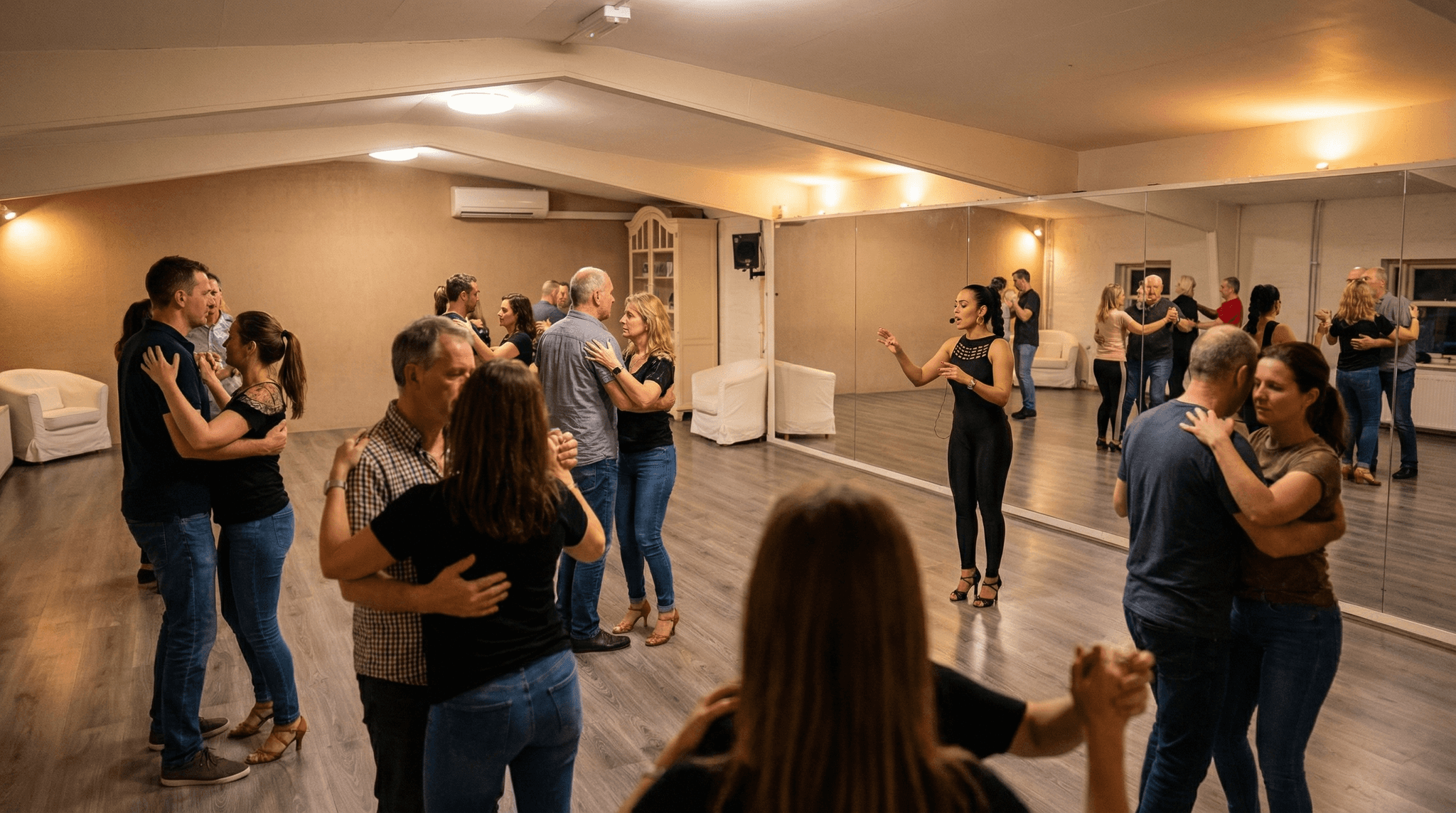
We dance kizomba: a calm walking dance close together, to music with a heavy bass, where you lead and follow mainly with your upper body.
A class usually lasts one hour; any exceptions are shown in the class timetable. We mostly explain in Dutch and also in English; if something isn't clear, we explain it to you personally again.
What you learn at each level
In Basics 1 you learn the basic steps and the basic saídas (Portuguese for "exit"): small steps in which the leader or the follower briefly steps out of the basic and comes back. That's how you build the language all kizomba figures are made of.
In Advanced you refine your technique, posture and musicality.
How long a level takes differs from person to person; the teacher watches and advises.
What is the difference with bachata?
Bachata and kizomba look alike from the outside, but feel different. Bachata is playful: guitar music, side steps with a tap, turns and footwork, alternating between open and close together. Kizomba is calmer: a heavy bass and a walking dance close together, where the small movements are in your hips and feet. Not sure? Ask us for advice.
Can I start without experience?
Yes. You don't need to know anything; you learn the basic steps and the first saídas in class.
How close do you dance in kizomba?
Close together, in an embrace: you lead and follow mainly with your upper body, and the small movements are in your hips and feet.
Duration
Timetable
Check the class timetable for days and times.